
Plat a Tree - A Meal for Wild Initiative

Plant a Tree – A Meal for the Wild: A Conservation-Driven Initiative
“Plant a Tree – A Meal for the Wild” was conceived in response to the intensifying human–wildlife conflict unfolding across the North Central Province of Sri Lanka, where shrinking forest resources have driven wild animals beyond their natural habitats in search of sustenance. In recent years, the frequency of wildlife incursions into forest-fringe villages has increased markedly, posing a serious threat to rural livelihoods, particularly subsistence and commercial agriculture. Despite concerted efforts by local communities and government authorities to deter animal movement into human settlements, conventional mitigation strategies have proven insufficient. This initiative takes a fundamentally ecological approach by addressing the root cause of the conflict: the depletion of natural food sources within wildlife habitats. Through careful observation of animal behaviour and the analysis of movement patterns, we have identified strategic reforestation zones within high-density wildlife corridors, focusing on planting tree species that serve as essential food sources for large herbivores such as Asian elephants and other forest-dependent species, thereby reducing their need to venture into human-dominated landscapes.
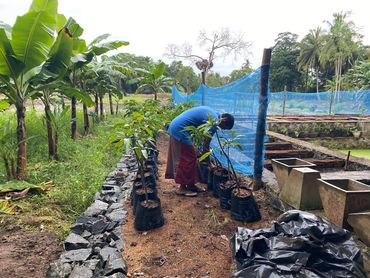
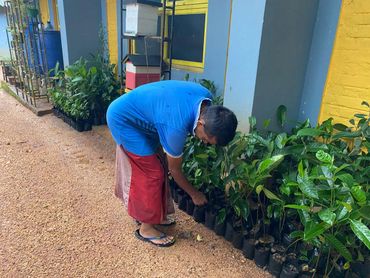
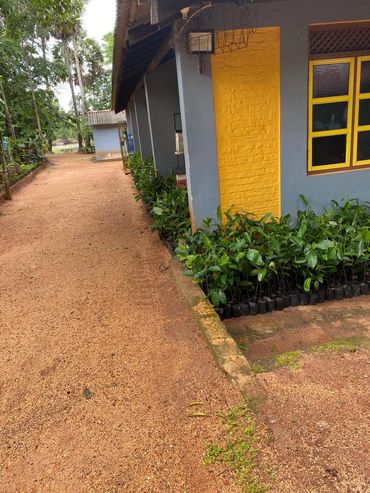
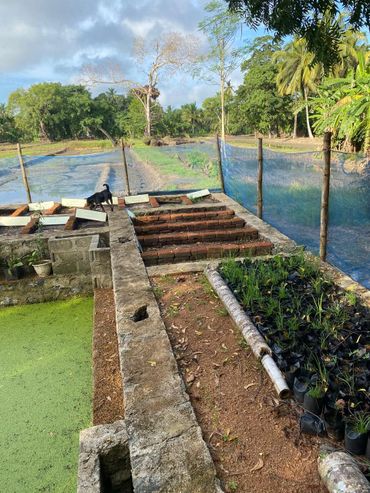
As the first phase of implementation, we undertook a comprehensive identification of native and wildlife-preferred tree and fruit species capable of delivering balanced, year-round nutrition to herbivorous fauna. Species such as jackfruit, wild mango, native berries, and a range of high-biomass, leaf-rich plant varieties have been cultivated in bulk to restore degraded forest food systems. To date, over 1,500 saplings representing ten ecologically significant plant varieties have been successfully raised within our dedicated nursery and rehabilitation center, where they will be nurtured for a period of three months to ensure strong root development and resilience prior to transplantation. These young trees are designated for reintroduction across 150 hectares of selected forest landscapes throughout the North Central Province, creating sustainable, self-replenishing food corridors within natural wildlife ranges.
In parallel, the Sri Lankan Government’s Reforestation Department has initiated the systematic clearing of invasive and non-native plant species across the same 150-hectare zones, removing aggressive vegetation that currently suppresses indigenous, wildlife-supporting flora. This collaborative ecological restoration effort is designed to revive the natural balance of these forest ecosystems, strengthen biodiversity, and rebuild resilient habitats that can sustain herbivore populations within protected forest boundaries. By revitalising these vital feeding grounds, the initiative seeks not only to conserve Sri Lanka’s rich wildlife heritage but also to protect forest-dependent communities by restoring harmony between people and nature through science-based, compassionate conservation.
If you wish to be a part of this initiative or make donations to make this initiative a country-wide successful project, please reach out to one of our representatives:
Alex Thanthriarachchi (In the Sinhala language)
+94 777 306393
Sanjeewa Bandujith (In Sinhala and English language)
+94 777 611877
Ongoing work - "Plant a Tree - Meal for Wild" initiative
.jpeg/:/cr=t:0%25,l:0%25,w:100%25,h:100%25/rs=w:370,cg:true)
.jpeg/:/cr=t:0%25,l:0%25,w:100%25,h:100%25/rs=w:370,cg:true)